By Tom Reid, Vice President of Power Generation Services, ENTRUST Solutions Group
Market dynamics are driving an increase in steam turbine cycling, sparking essential questions about operational readiness. Regardless of a turbine’s age or design, industry best practices can help operators prepare for this challenging future.
By leveraging modern fracture mechanics technologies, startup processes can often be optimized for time and safety with minimal capital investment.
A notable challenge is that many current steam turbines were designed before fracture mechanics were integrated into turbine generator design. These units often follow startup procedures unchanged for over 30 years.
By applying advanced analytical methods, updated technical capabilities, and material testing to better understand rotor aging, operators can tap into the inherent design margins of legacy turbines.
This article outlines key recommendations for evaluating the feasibility of increased cycling, engineering factors affecting cold start procedures, and common areas for optimization.
Before implementing a cycling program, it is vital to assess operational limitations and turbine conditions that may restrict cycling capability. ENTRUST Solutions Group recommends starting with the following factors for an initial feasibility review.
For bored rotors, review the latest magnetic particle and ultrasonic bore inspection data. These inspections determine the location and size of flaws, if any. If no indications are found, engineers should assume the presence of a flaw equal to the material’s minimum detectable size at the highest-stress locations.
For solid rotors, periodic ultrasonic inspections should be conducted from the rotor’s periphery, and findings should be evaluated using fracture mechanics.
Startups often result in steam-to-metal temperature mismatches, causing casing cracking. It’s essential to evaluate crack depth relative to wall or ligament thickness. Unchecked cycling exacerbates crack propagation unless stress at the crack tip is significantly reduced. Mitigating these effects involves minimizing steam-to-metal temperature mismatches.
Additional cycling increases solid particle erosion in the high-pressure (HP) and intermediate-pressure (IP) turbine blades, exacerbated by exfoliated material from the boiler. Based on blade condition, refurbishment or replacement may be necessary before increasing cycling frequency.
Rotor material characteristics, such as Fracture Appearance Transition Temperature (FATT) and Charpy Impact data, provide critical input for fracture toughness analyses. Critical crack size calculations depend on available material toughness data, stresses, and crack characteristics. If material data is unavailable due to rotor age, testing may be performed during outages or conservative data from similar vintage forgings may be used.
Rotors and casings expand at different rates during startup. Adequate clearances must exist to prevent contact between rotating and stationary parts. Differential expansion alarm limits should be validated to reflect build clearances and appropriate operational sensitivity.
Older rotors can experience thermally sensitive bows due to uneven material properties, causing vibration issues, especially during startup. Extreme vibrations may lead to babbitt bearing damage or blade-seal rubbing.
Casing thermocouples offer insights into heating rates and the effectiveness of startup procedures. Critical review of this data can guide modifications to ensure rotor safety during startups.
Increased cycling increases the likelihood of faults such as water induction, overspeed, or loss of lubrication. Assessing and strengthening protections against these events is vital before cycling intensifies.
Optimization studies can reduce startup duration if no critical limitations are identified while ensuring long-term rotor reliability. Historically, fatigue models assumed crack-free rotors and prioritized limiting stress to delay crack initiation. Modern fracture mechanics, however, assumes flaws exist and evaluates crack propagation under cyclic stresses. Rotor life, in this case, is determined by assessing safety margins for cracks growing to critical size.
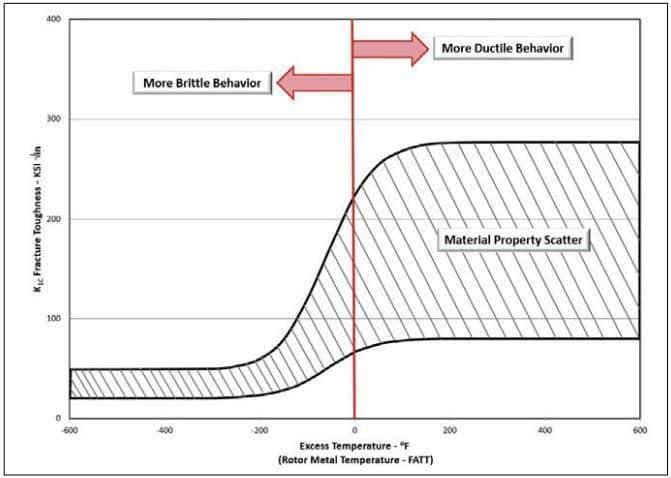
HP and IP rotors have FATT values around 200°F when new, which may degrade to over 300°F with service life. Rotor fracture toughness improves significantly as rotor temperatures increase, with properties potentially tripling at higher temperatures (see Figure 1). Therefore, prewarming HP and IP rotors prior to startups is critical.
LP turbine and generator rotors exhibit superior fracture toughness, even at room temperature, and generally do not constrain startup rates. However, the size and location of existing flaws may limit cycling potential.
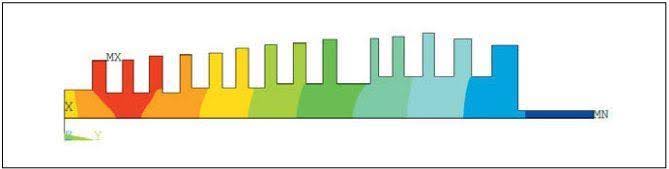
Fracture toughness and stress levels are temperature-dependent. Transient heat transfer models calculate temperature distribution during startup, as shown in Figure 2.
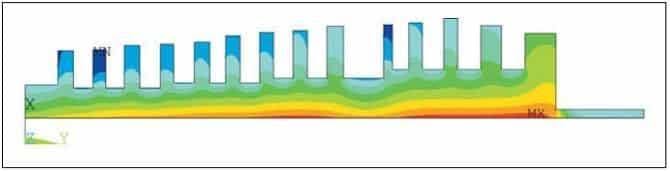
Stress distributions are analyzed alongside temperature data. For instance, Figure 3 illustrates peak stresses occurring at the rotor bore.
Combining temperature, stress, and existing flaws allows calculation of critical crack sizes throughout the startup process. Figure 4 demonstrates the smallest critical crack sizes occurring within 1.5 hours of turbine roll, underscoring the importance of conservative heating at low temperatures.
Meet OEM conditions for steam line warming, superheat levels, and rotor eccentricity. Rolling at lower steam pressures can enhance superheat levels and reduce stress. However, ensure steam temperatures are sufficient to avoid stressing cold rotors with poor fracture toughness.
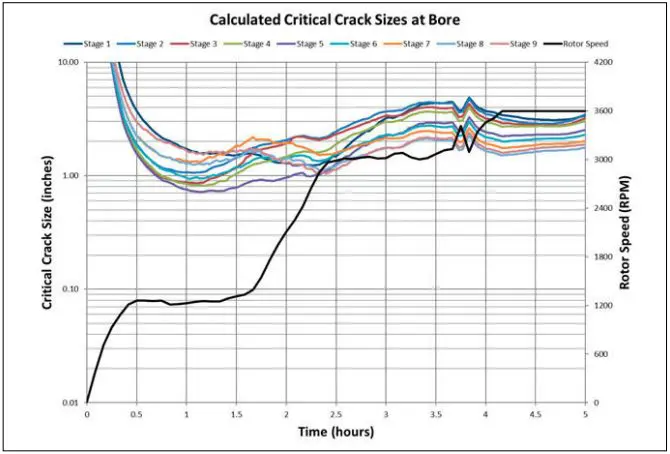
Incorporating a low-speed heat soak minimizes centrifugal stresses while improving rotor fracture properties before ramping to higher speeds. Avoid arbitrary hold speeds, as they may inadvertently induce unsafe blade vibration. Enforce OEM-specified avoidance zones.
Once fracture properties improve, prolonged low-load holds often yield no additional benefits and can introduce new risks, such as windage heating, blade flutter, and erosion.
Using auxiliary steam sources to preheat critical turbine areas before startup can significantly reduce heating time, particularly for regions with greater thermal mass.
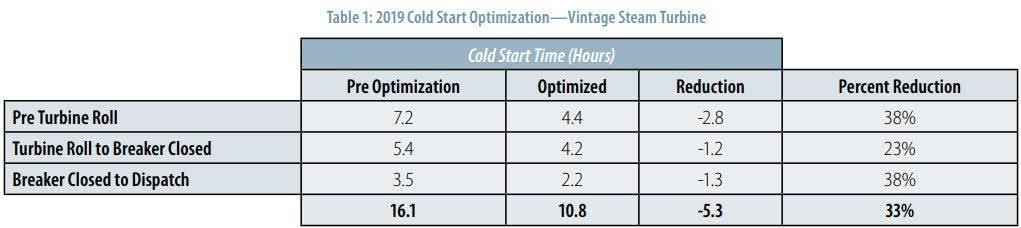
Table 1 provides an example of a vintage turbine’s cold start time being reduced by one-third following finite element analyses, fracture mechanics evaluations, and best practice implementation.
The power industry’s evolving landscape demands heightened operational flexibility. By applying sound engineering judgment, inspection insight, and modern fracture mechanics principles, steam turbine startups can be optimized.
Based on ENTRUST’s experience, cold start durations for older units can often be reduced by 25–50%, significantly improving dispatchability and cost savings while adhering to OEM design parameters and safety requirements.
Get in touch with one of our experts today to find out how we can improve your steam turbine startups.
***
Tom has spent the entirety of his 15-year career in the power generation industry.
In his current role as Vice President of Power Generation for ENTRUST, Tom oversees a team of approximately 100 engineers, whose expertise covers power plant equipment, modeling, and testing.
Prior to ENTRUST, Tom held turbine design and repair roles at General Electric. Tom is a graduate of GE’s Edison Engineering Development Program and holds 7 U.S. patents. He holds an BSME degree from Virginia Tech, an MSME degree from Georgia Tech, and is a registered professional engineer in the state of Delaware.

 (630) 353-4000
 info@entrustsol.com