By Tom Reid, Vice President of Power Generation Services, ENTRUST Solutions Group
Environmental pressures have prompted power generation owners across the U.S. to reevaluate their coal assets, exploring options like retirement, repowering, emission control upgrades, or conversion from coal to natural gas. Among these, natural gas conversion stands out as a viable economic solution, particularly for units in the 250 MW or lower range. These units often cannot justify the cost of SCR and scrubber technology installation, typically reserved for 500 MW and larger plants.
A key consideration during the due diligence phase is to evaluate all plant systems comprehensively—not just the boiler hardware—for accurate project cost estimations.
Retired coal units, combined with favorable natural gas price forecasts, position converted plants to play an increasingly strategic role. Such plants are expected to provide operational flexibility, balancing frequent on-off cycling during periods of low demand with extended, reliable operation during high-demand periods. Unfortunately, many of these units are aging assets with historically minimal maintenance budgets, often planned with near-term retirement in mind.
Neglecting the steam turbine generator in a gas conversion project budget introduces significant risks to achieving reliability goals.
ENTRUST Solutions Group has identified that many associated steam turbine generators require substantial investment to support lifecycle extension. Below is an overview of critical turbine generator concerns to address during such projects.
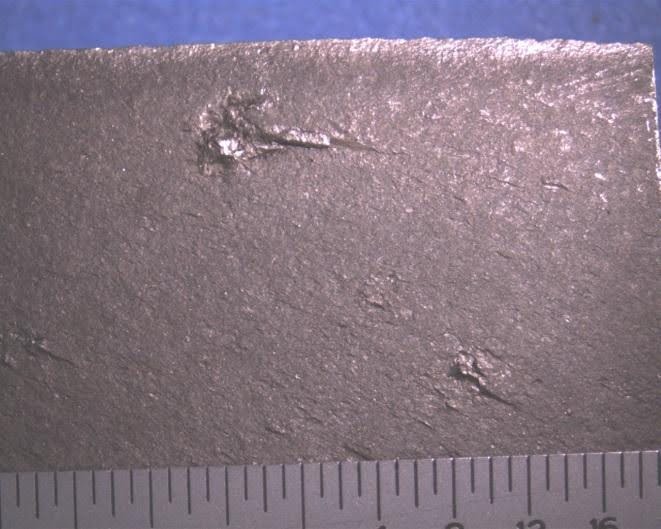
After 30 to 40 years of operation, rotors may develop flaws that can grow to concerning sizes (see Figure 1).
High-temperature rotors may experience creep voids due to prolonged exposure to stress and heat. Material embrittlement from temperature exposure may necessitate frequent inspections, extended start-up thermal soak periods, or even rotor replacement.
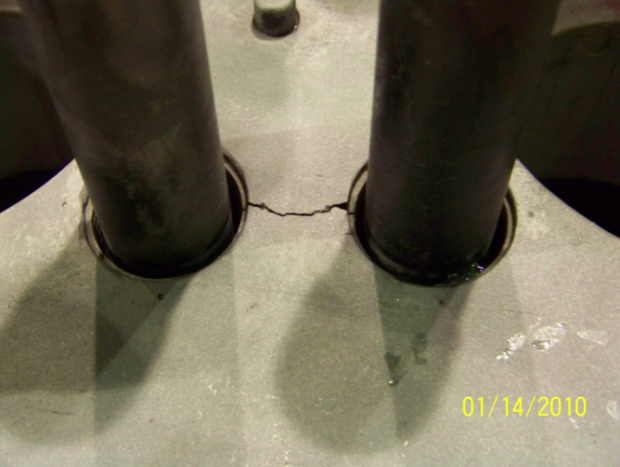
Cracks in casings and valve bodies often result from low cycle fatigue (LCF) due to repeated start-stop operations. These cracks (see Figure 2) typically emerge later in a unit’s lifecycle, between 300 and 500 on-off cycles.
Repair or replacement may be necessary if cracks penetrate 25-35% of casing thickness.
Control systems generally become obsolete after about 20 years of operation. Modernization is vital for continued reliability.
Steam turbine ‘water inductions’ can inflict severe internal damage. Following fuel conversion, the risk of water induction often increases, demanding heightened protection.
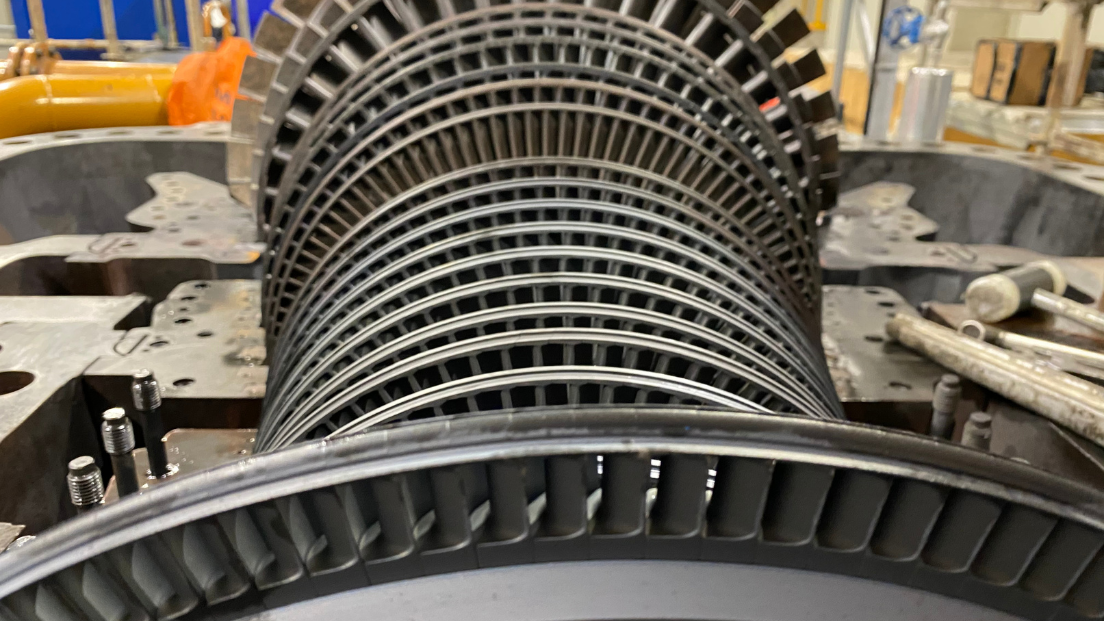
LP turbine blades operate in low-quality steam and are prone to erosion. Blade replacement may be necessary as erosion worsens.
These large, highly stressed components also face accelerated fatigue life consumption from frequent on-off cycling, leading to cracking (see Figure 3).
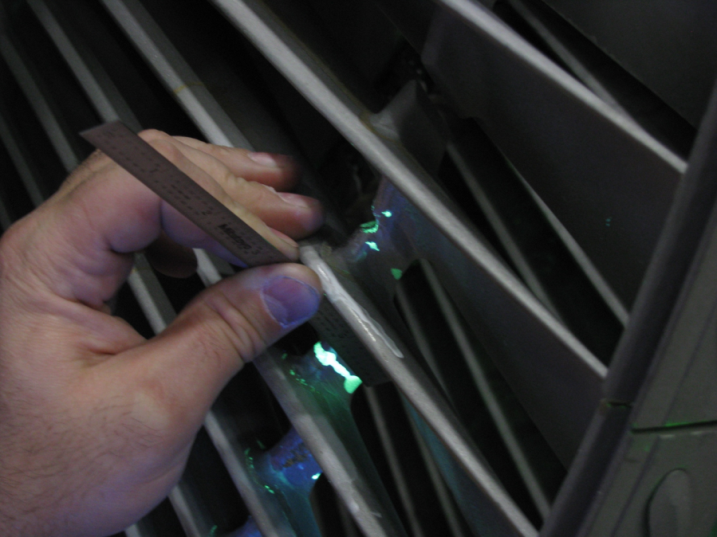
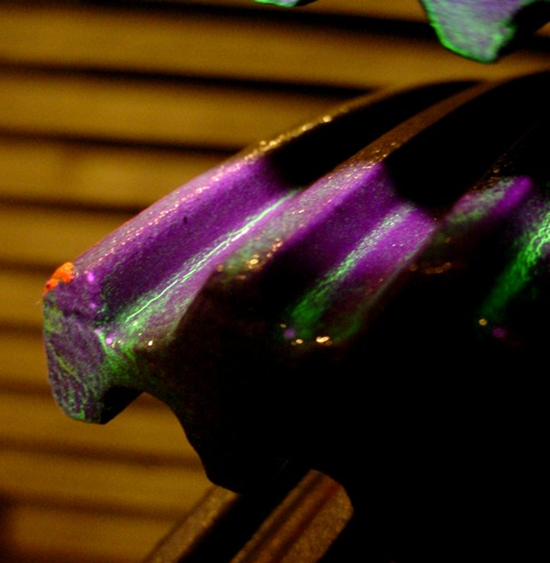
SCC in LP rotor dovetails is a common concern, often appearing in fossil units as early as 100,000 operating hours and requiring costly repairs (e.g., weld repair, new blading) around the 200,000-hour mark (see Figure 4).
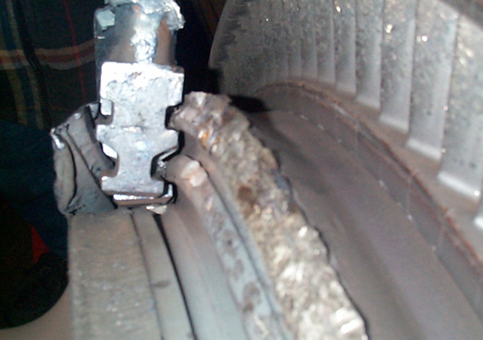
Extended exposure to high stress and temperature can result in dovetail creep or creep fatigue failures, with over 250,000 operating hours raising significant concerns (see Figure 5).
Generator windings have a reliable operational life of roughly 30 years. Extending plant life under a gas conversion project will often require partial or full stator rewinds.
Rotor windings, particularly in end-turn regions, are vulnerable to low cycle fatigue from start-stop centrifugal stress and thermal expansion/contraction cycles. Key areas prone to fatigue include rotor radial lead connections and pole crossover jumpers.
Hot spots and shorted laminations in stator cores are common on older units. These issues reduce stator winding life and, in extreme cases, may necessitate a full core replacement. Partial restack solutions may address hot spots located near the ends of the core.
Many older units have transitioned from rotating exciters to static systems to improve reliability. However, comprehensive replacement contingency plans for aging excitation and automatic voltage regulator (AVR) systems should still be developed.
Gas conversion projects present a unique opportunity to extend the lifecycle of existing coal-fired plants, but failing to account for the maintenance and reliability of steam turbine generators can undermine the success of these efforts. Addressing key turbine and generator issues during project planning and execution will ensure long-term operational flexibility, reliability, and financial returns.
ENTRUST’s extensive expertise in turbine generator evaluations and life-extension strategies provides plant operators with the insights and solutions necessary for successful gas conversion projects.
Contact us today to find out more.
***
Tom has spent the entirety of his 15-year career in the power generation industry.
In his current role as Vice President of Power Generation for ENTRUST, Tom oversees a team of approximately 100 engineers, whose expertise covers power plant equipment, modeling, and testing.
Prior to ENTRUST, Tom held turbine design and repair roles at General Electric. Tom is a graduate of GE’s Edison Engineering Development Program and holds 7 U.S. patents. He holds an BSME degree from Virginia Tech, an MSME degree from Georgia Tech, and is a registered professional engineer in the state of Delaware.

 (630) 353-4000
 info@entrustsol.com